UI/UX Design Trends Reshaping Our Digital Interactions in 2025
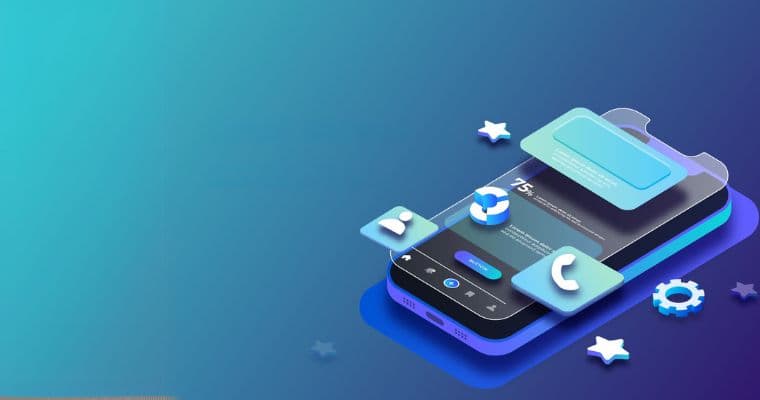
User Interface (UI) and User Experience (UX) design are entering a transformative era.
As we step into 2025, digital design is no longer just about aesthetics or usability — it’s about intelligence, empathy, and sustainability.
Here’s how the top UI/UX trends of 2025 are reshaping the future of digital interaction.
1. From Static to Dynamic Experiences
Digital interfaces are evolving from static, one-size-fits-all designs into adaptive ecosystems that respond to user behavior in real time.
AI-powered personalization ensures that every interaction feels natural and uniquely tailored.
Example: A productivity app dynamically adjusts its layout depending on when and how you work — prioritizing focus tools during your peak cognitive hours and simplifying content during downtime.
2. Humanized Intelligence: Your Digital Companion
Artificial intelligence has matured beyond automation — it’s becoming empathetic.
In 2025, interfaces learn, predict, and respond contextually to emotions, tone, and habits.
Machine learning enables systems to adapt layouts, recommendations, and even language based on subtle behavioral signals — making every digital moment feel deeply personal.
3. Design for Everyone, Not Just Most
Accessibility is now an innovation driver, not an afterthought.
Designers are creating truly inclusive interfaces that account for visual, auditory, cognitive, and motor differences.
With advanced screen readers, haptic feedback, and AI-driven translation, digital content is more universally reachable than ever — democratizing technology for all.
4. Seamless Digital-Physical Integration
The boundary between screens and the physical world is dissolving.
AR (Augmented Reality) and MR (Mixed Reality) are merging digital experiences with real environments.
Imagine walking through a city and seeing live navigation cues, contextual recommendations, or historical overlays directly within your field of vision.
Industries like architecture, education, and healthcare are using these immersive spaces to collaborate in entirely new dimensions.
5. Emotionally Intelligent Interfaces
Emotionally aware systems can now read user sentiment through text, tone, or facial cues — adjusting tone and behavior dynamically.
- A chatbot that detects frustration and softens its tone.
- A learning app that notices cognitive fatigue and recommends a break.
This is the new era of empathetic design — where digital experiences feel genuinely human.
6. Microinteractions as Emotional Design
Microinteractions — tiny animations, transitions, and vibrations — now shape the soul of user experience.
From the bounce of a button to the fluidity of a transition, designers treat every movement as a storytelling moment.
These small cues create emotional continuity between screens, making interfaces feel alive, natural, and reassuring.
7. Sustainable and Ethical Design
As digital products dominate daily life, designers are rethinking their environmental and ethical footprint.
Sustainable design means interfaces that minimize resource use, promote mindful consumption, and respect user data.
Examples:
- Dark mode as an energy-saving feature.
- Clear privacy dashboards.
- Prompts that reduce digital addiction.
Ethics and sustainability are no longer brand differentiators — they’re baseline expectations.
8. Beyond Touch: The Multimodal Era
Voice, gesture, and even eye-tracking interactions are becoming mainstream.
The future interface listens, sees, and feels — removing friction for people with physical limitations while adding fluidity for everyone else.
In 2025, multimodal design means UX that doesn’t depend on fingers alone.
9. Predictive and Proactive UX
AI-driven prediction allows apps to anticipate needs before users act.
From task prioritization in project tools to proactive route suggestions in navigation apps — design is becoming intuitive foresight.
It’s no longer just responsive — it’s anticipatory.
10. Quantum Visualization: Designing for the Next Computing Frontier
As quantum computing moves toward mainstream adoption, designers are developing new visualization systems to interpret quantum data.
These interfaces use:
- Probabilistic visual models
- Quantum state graphs
- Dynamic uncertainty mapping
A possible formula to represent quantum visualization data flow:
$$ QV(x, t) = \psi(x, t) \times |A|^2 $$
where ( \psi(x, t) ) is the quantum state function and ( |A|^2 ) represents user attention probability density — bridging mathematical modeling with interactive visualization.
This intersection of design and quantum computation aims to make the abstract understandable — a revolution in scientific UX.
11. Cross-Device Continuity
Experience is now device-agnostic.
Your session, context, and preferences travel across smartphones, wearables, AR glasses, and IoT systems — creating a truly unified experience ecosystem.
No matter where you resume, your digital environment feels the same — seamless, personal, continuous.
12. Cognitive Load Optimization
Designers now account for how much mental energy users can expend.
Smart layouts dynamically adjust content hierarchy, reveal complexity progressively, and prevent overload.
It’s about designing with empathy — understanding how humans think and feel when facing information-dense systems.
The Future of Human-Centric Design
UI/UX in 2025 is more than technology — it’s empathy, intelligence, and ethics combined.
The goal isn’t to make humans adapt to interfaces, but to make interfaces adapt to humans.
At Robral Technologies, we’re shaping this evolution by building interfaces that think, feel, and grow with users — merging psychology, design, and data into a single seamless experience.
Tags
Ready to Transform Your Business?
Let's discuss how we can help you achieve your digital transformation goals with cutting-edge technology solutions.